
 By
By 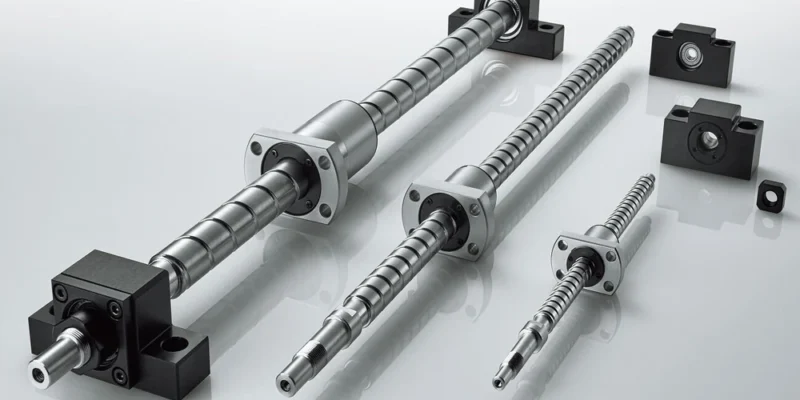
In high-precision manufacturing and industrial automation, selecting the right linear motion components dictates the overall efficiency of an entire production line. Mechanical engineers constantly seek high-performance mechanisms that can convert rotary motion into linear motion with minimal friction, high repeatability, and minimal backlash. Among the trusted industrial components driving factory automation today, the THK ball screw BLK series (known in Thai as “บอลสกรู BLK“) stands out as an industry standard for heavy-duty applications. Implementing this linear guide configuration bridges the gap between high load capacities and micro-level mechanical accuracy.
For modern manufacturing plants looking to optimize machinery throughput, understanding the precise engineering parameters of these components is vital. By choosing the correct mechanical architecture, industrial facilities can reduce transmission power losses, mitigate unexpected mechanical wear, and ensure that automated assembly systems operate reliably under rigorous, continuous manufacturing environments.
What Is a Ball Screw BLK?
The BLK series is a high-precision linear actuator system developed by THK, a leading manufacturer of motion control technologies. It consists of a threaded shaft and a specialized nut that utilizes an internal ball recirculation mechanism. Unlike conventional lead screws that experience high sliding friction, this design incorporates spherical steel bearings that roll continuously within the nut tracks. By transforming sliding friction into rolling motion, it minimizes torque requirements and delivers high mechanical efficiency. The robust construction of this specific series is engineered to manage high axial loads while maintaining a compact physical profile, supporting long-term structural alignment during industrial operations.
What Types of Industrial Applications Is It Used For?
The structural rigidity of this mechanism makes it suitable for heavy-duty industrial machinery that demands high accuracy under significant stress. Engineers typically specify the THK ball screw BLK architecture for large-scale CNC machining centers, automated industrial transport systems, and precise plastic injection molding machines. Its load-carrying capacity supports reliable motion control when manipulating heavy molds or large automotive components. Furthermore, because it handles high thrust forces effectively, it is integrated into robotic welding arms and aerospace positioning fixtures where mechanical positioning stability and continuous operational safety are required.
How Does It Differ From BIF, BNK, and SBK Models?
To select the appropriate component for a specific factory layout, it is helpful to understand how the ball screw BLK system compares to other major THK design standards, such as the BIF, BNK, and SBK models. While all these variations facilitate linear transmission, their internal ball recirculation paths, preloading characteristics, and physical mounting footprints vary to serve distinct operational purposes.
Comparison with the BIF Series
The BIF series focuses primarily on smooth motion through a specialized internal nut preload mechanism that eliminates axial clearance. In contrast, the ball screw BLK model prioritizes load-bearing capacity and structural rigidity, making it suitable for heavy manufacturing equipment rather than low-load laboratory instrumentation.
Comparison with the BNK Series
The BNK standard features an integrated design with finished shaft ends, optimized for compact ball screw support units. However, a high-capacity ball screw BLK unit offers customization flexibility for large-scale industrial machinery layouts, allowing engineers to configure custom shaft lengths that fit expansive automated factory assemblies.
Comparison with the SBK Series
The SBK series utilizes a high-speed ball return structure engineered for rapid-velocity linear travel with low noise. Conversely, the ball screw BLK framework is optimized for thrust distribution and axial resistance, ensuring the system maintains its rigidity under slow, high-pressure mechanical pressing forces.
Achieving consistent mechanical output requires a clear understanding of the specialized components guiding an automation infrastructure. As industrial facilities target high precision and controlled maintenance costs, selecting the appropriate actuator setup helps prevent unscheduled downtime. Investing in a genuine THK ball screw BLK system ensures durability, energy efficiency, and high-thrust linear transmission for heavy machinery.
For businesses seeking authentic industrial parts, authorized distributor I.N.B. Enterprise offers a comprehensive catalog of high-precision motion control technologies from THK. Their technical team provides product consultation and engineering data to ensure your components are matched to your specific operational loads. To learn more about THK solutions or to request detailed specifications for your machinery, contact the engineering team at I.N.B. Enterprise for expert support.









Comments